By I. Inojales | 06:54 PM July 10, 2025

BOHOL — More than a decade after the devastating Magnitude 7.2 earthquake struck Bohol in 2013, experts and researchers from across the region returned to the island to revisit its impacts and gather valuable lessons for disaster preparedness and resilience.
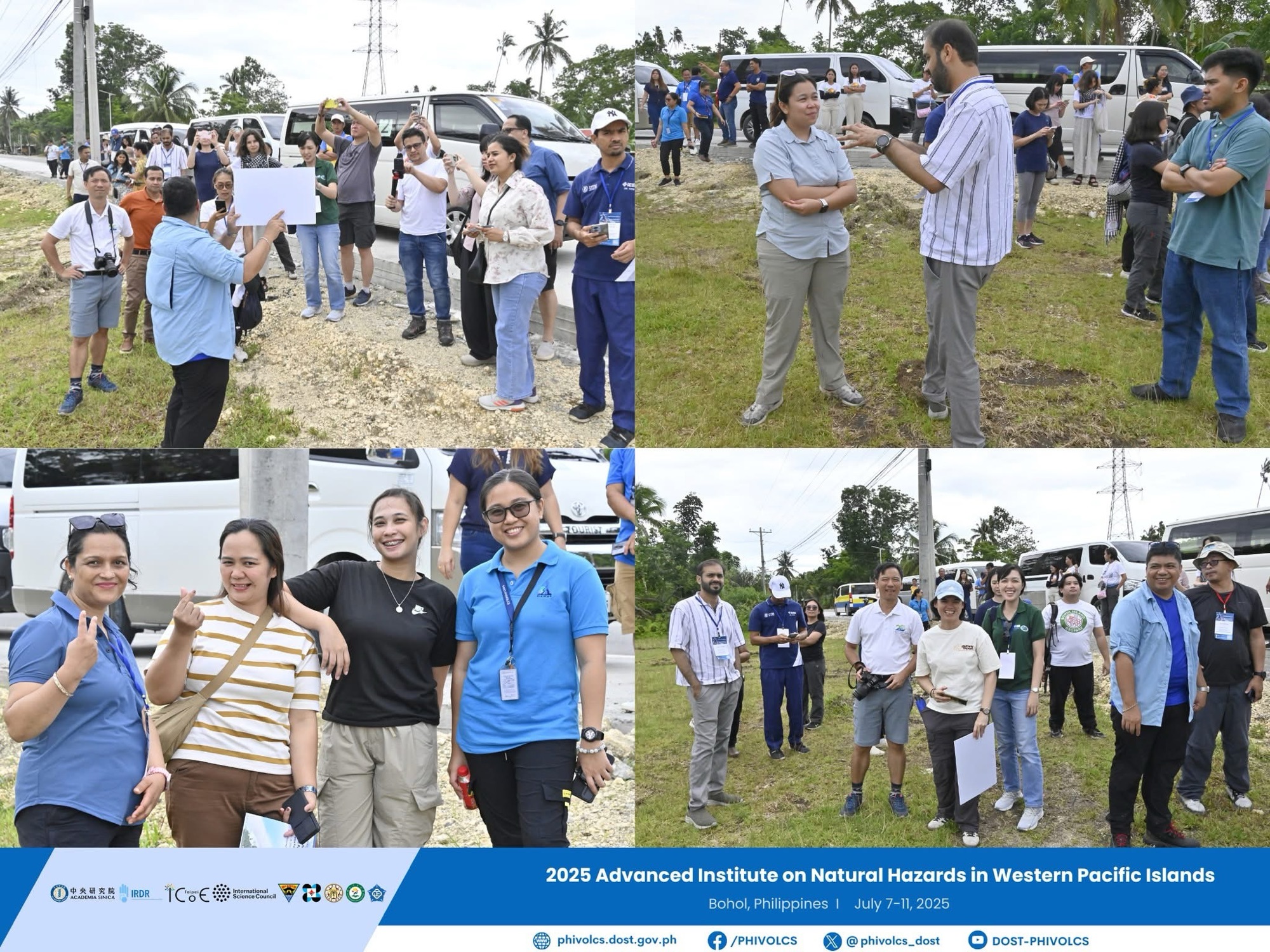
On July 9, 2025, participants of the 2025 Advanced Institute on Natural Hazards in Western Pacific Islands embarked on a field trip across several of Bohol’s hardest-hit areas, retracing the quake’s aftermath and the province’s ongoing recovery efforts.
The group first traveled to Inabanga, where they closely examined the visible surface rupture caused by the powerful tremor. There, experts discussed the morphology of the thrust fault responsible for the quake, noting its significant geological and societal impacts.
From Inabanga, the team proceeded to Sagbayan, one of the towns near the quake’s epicenter. They visited the damaged and reconstructed municipal hall and residential areas, as well as the landslide-affected Chocolate Hills — a stark reminder of how the 2013 earthquake reshaped Bohol’s natural and built environments.
In the afternoon, the delegation toured Loon Church, a centuries-old heritage church that was reduced to rubble during the quake. After years of careful restoration, the historic church was fully reconstructed in 2021, becoming a symbol of Bohol’s resilience and cultural preservation.

The final stop was in Maribojoc, where participants observed the uplifted marine terrace — a remarkable geological feature where the coastline shifted over 50 meters seaward due to a 1.5-meter uplift caused by the earthquake.
The field study formed part of the Advanced Institute’s broader effort to promote collaboration, knowledge-sharing, and practical strategies to mitigate the societal risks posed by natural hazards in the region.
“By visiting these sites, we aim to deepen our understanding of the long-term impacts of such disasters and reinforce the importance of resilient infrastructure, early warning systems, and community preparedness,” one of the organizers said.
The activity highlighted not only Bohol’s geological history but also its ongoing journey of recovery and preparedness, offering valuable insights for hazard-prone island communities across the Western Pacific.