By Helen Castaño | 4:18 PM February 04, 2025

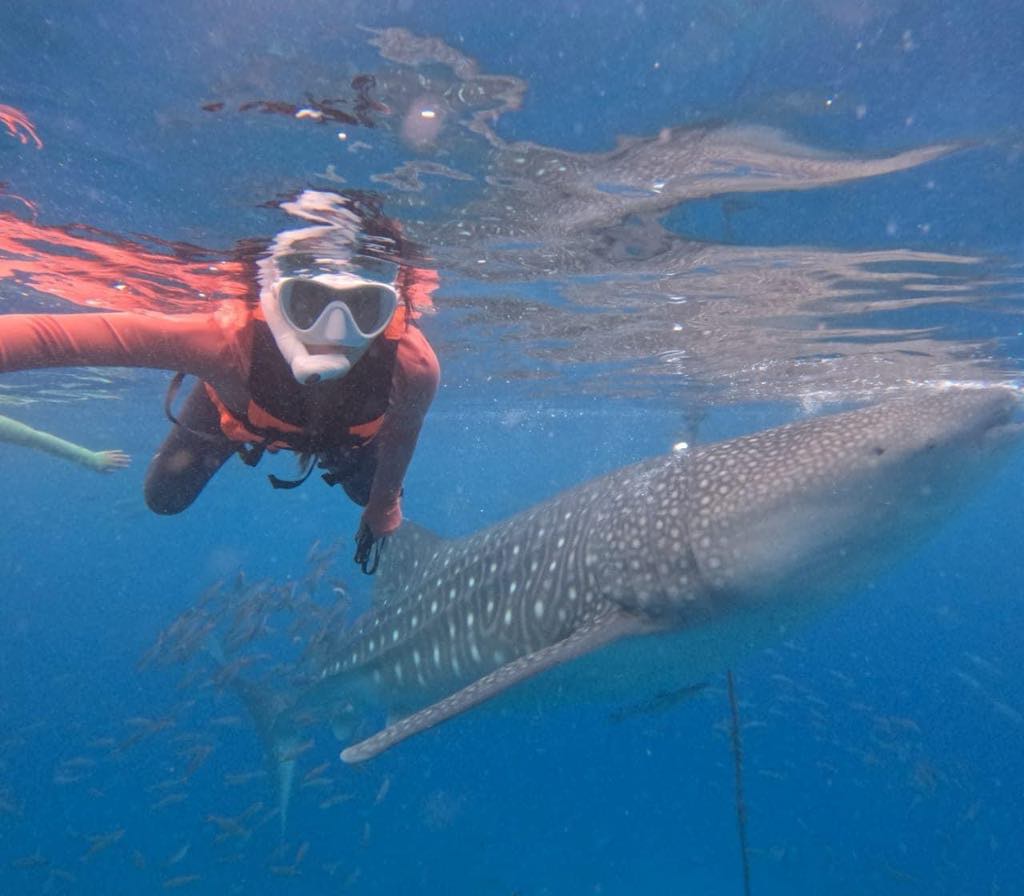
Calling it fake eco-tourism by environment advocates, the whale shark watching activities in Bohol province was closed on Monday to protect the tourism industry.
Gov. Erico Aristotle Aumentado signed Executive Order No. 10 series of 2025 ordering the immediate cessation of whale shark interaction activities in the towns of Lila, Alburquerque and Dauis.
“They violate our Provincial Ordinance that no feeding is allowed for our whale sharks,” said Aumentado after he signed the ordinance Monday afternoon.
Provincial Ordinance No. 2020-008 approved on March 31,2020, and joint memorandum circular (JMC) No. 1, series of 2020, issued by Department of Tourism, Department of Environment and Natural Resources (DENR), Department of Agriculture (DA) and Department of Interior and Local Government (DILG), provide rules and regulations governing sustainable marine wildlife tourism interaction, consistent with the Convention on the Conservation of Migratory Species of Wild Animals (CMS) Resolution No. 1242.
The whale shark interaction activities have recently emerged as tourist attractions in Bohol, pioneered in the Municipality of Lila, and subsequently expanding in the municipalities of Alburquerque and Dauis.
In Lila, its whale shark watching and snorkeling opened in 2019. Whale watching in Alburquerque was opened in 2023, while in Dauis it opened last December 2024.
Aumentado said that the province of Bohol, a designated UNESC Global Geopark, is committed to preserving its rich natural and environmental resources, and has positioned itself as a regenerative island, emphasizing a holistic approach to sustainable development by balancing economic, social, and environmental needs.
On November 22, 2023, the office of the governor established an inter-agency team to investigate reports of illegal feeding practices used to attract whale sharks for these tourist activities. The inter-agency confirmed that whale shark interaction activities in Lila and Alburquerque involve feeding the marine animals with krill, and found krill present in the interaction areas, and along with a foul odor emanating from these areas.
“Ang surrounding dinhang dapita nakahatag og foul odor and the overall image of Bohol and its tourism industry could be severely compromised,” Aumentado said.
Similar reports, including foul odors, have been received regarding the whale shark interaction activities in Dauis.
Reports indicated that the operators of these whale shark interaction activities have not secured the necessary clearances from concerned national agencies, including; the Department of Environmental and Natural Resources (DENR) and the Bureau of Internal Revenue (BIR).
Concerned stakeholders, represented by the Provincial Tourism Council and public interest groups such as Tagbilaran Baywatch, have expressed serious concerns regarding the continued and unabated feeding of whale sharks in these three areas, citing clear violations of the ordinance and convention agreements.
Whale shark interaction activities in Bohol’s seawaters shall remain suspended until the DENR, BIR, Bohol Provincial Environment Management Office (BPEMO), and concerned local government units each confirm that all applicable requirements under their respective jurisdictions for these activities have been met, following a comprehensive industry-wide consultation with stakeholders and conservation groups.
Environmental groups say tourist activity disrupts sea creatures’ hunting behavior, puts them in harm’s way. Conditioning or feeding the whale sharks created negative effects on the mammals especially on their migration pattern.