By J. Jala | 11:54 AM April 24, 2020

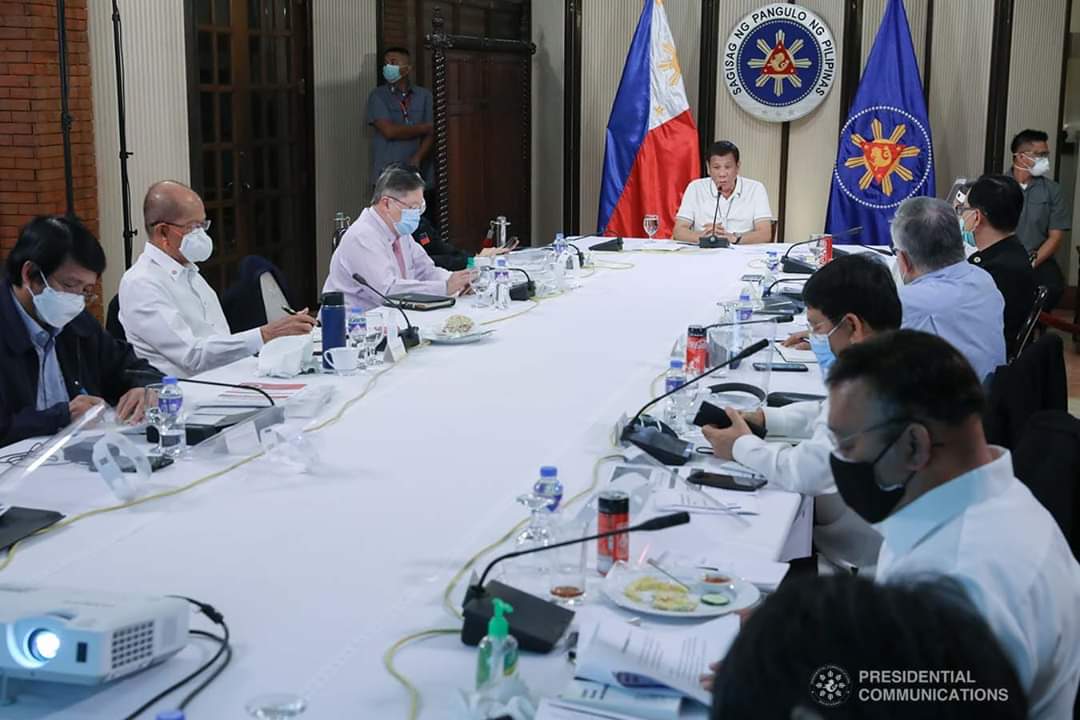
The Inter-Agency Task Force for Emerging Infectious Diseases (IATF-EID) on Thursday, April 23, recommended to place Bohol province and other areas to “General Community Quarantine” (GCQ).
GCQ is a form of quarantine with more relaxed measures compared to the enhanced community quarantine (ECQ). It will be enforced in provinces and cities considered to have moderate or low risk to COVID-19.
Aside from Bohol, other provinces which are considered Low-risk areas (under GCQ) are
Apayao, Mountain Province,
Ifugao,Kalinga,Ilocos Sur,Batanes,Quirino,
Aurora, Palawan, Romblon, Camarines Norte, Sorsogon, Masbate,Guimaras, Biliran,
Eastern Samar, Leyte, Northern Samar, Southern Leyte, Zamboanga del Norte, Zamboanga Sibugay, Bukidnon, Camiguin, Davao Occidental, Sarangani, Agusan del Sur, Dinagat Island, Surigao del Norte,
Surigao del Sur, Agusan del Norte, Basilan, and Sulu.
It also recommended that enhanced community quarantine (ECQ) in the National Capital Region, Region III, Region IV-A and all other high-risk areas up to May 15.
Provinces considered high-risk in Region III include Bataan, Bulacan, Nueva Ecija, and Pampanga. High-risk provinces in Region IV-A are Batangas, Cavite, Laguna, Rizal and Quezon. Oriental Mindoro and Occidental Mindoro comprise high-risk provinces in Region IV-B while Albay and Catanduanes are the high-risk provinces in Region V. Benguet in CAR, Pangasinan in Region I, Tarlac and Zambales in Region III may change by April 30.
In the Visayas, the IATF considered Antique, Iloilo, Cebu and Cebu City high-risk, all subject to recheck, Aklan and Capiz, which are both subject to ECQ. In Mindanao, Davao del Norte and Davao City are considered high-risk, while Davao de Oro is subject to ECQ and subject to recheck.
High-risk areas will be under ECQ until May 15, subject for further evaluation. Moderate-risk areas meanwhile will be under general community quarantine until May 15, also subject for further evaluation.
Low-risk areas will fall under general community quarantine until May 15, and if there is no deterioration, GCQ will be relaxed leading to normalization.
Areas previously under ECQ but remain under GCQ will allow workers to go out and work in phases. Young people, senior citizens and high health risk would stay at home.
For GCQ areas, restricted mall opening covering non-leisure shops would be allowed. There will be mandatory temperature check, mandatory wearing of masks, mandatory alcohol use. Limited number of people, particularly those with age 21 to 59, with ID and not looking sickly, would be allowed to go inside.
Priority and essential construction projects would likewise be allowed to resume, subject to minimum health standards, physical distancing, and barracks for workers. Public transport modes would likewise be allowed to operate at reduced capacity. Local government units (LGUs) would enforce curfew at night for non-workers.
The decision on ECQ and GCQ were based on the risk of outbreak. Areas under ECQ would again undergo evaluation if the decision can be relaxed starting May 16, 2020. with reports from OPS, PIA